Dalí’s 1938 Meeting With Freud Shifted the Psychoanalyst’s View of Surrealism
Dalí sought Freud’s approval for his art and ideas. Their 1938 meeting left both puzzled, yet Freud reconsidered the Surrealists.
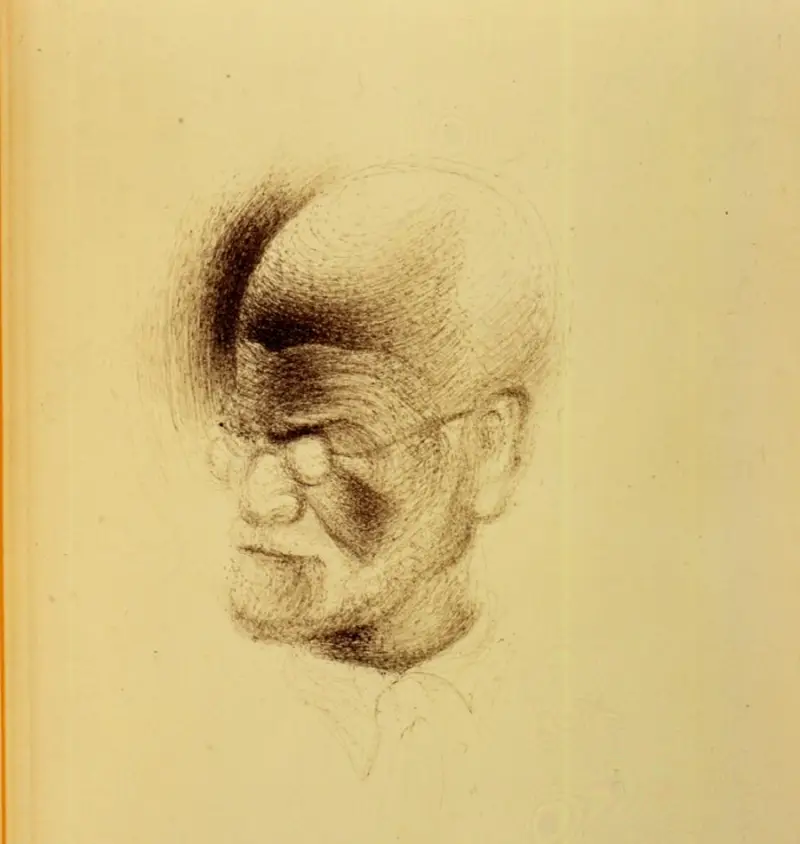
Salvador Dalí went to London hoping Sigmund Freud would recognize the ideas behind his art. The meeting didn’t deliver the personal endorsement the artist seemed to want, but it did leave Freud with a more favorable view of Surrealism. That small shift matters: the encounter brought together an artist who treated Freud’s writing as a guide to the unconscious and a psychoanalyst wary of being claimed as the movement’s intellectual patron.
A meeting years in the making
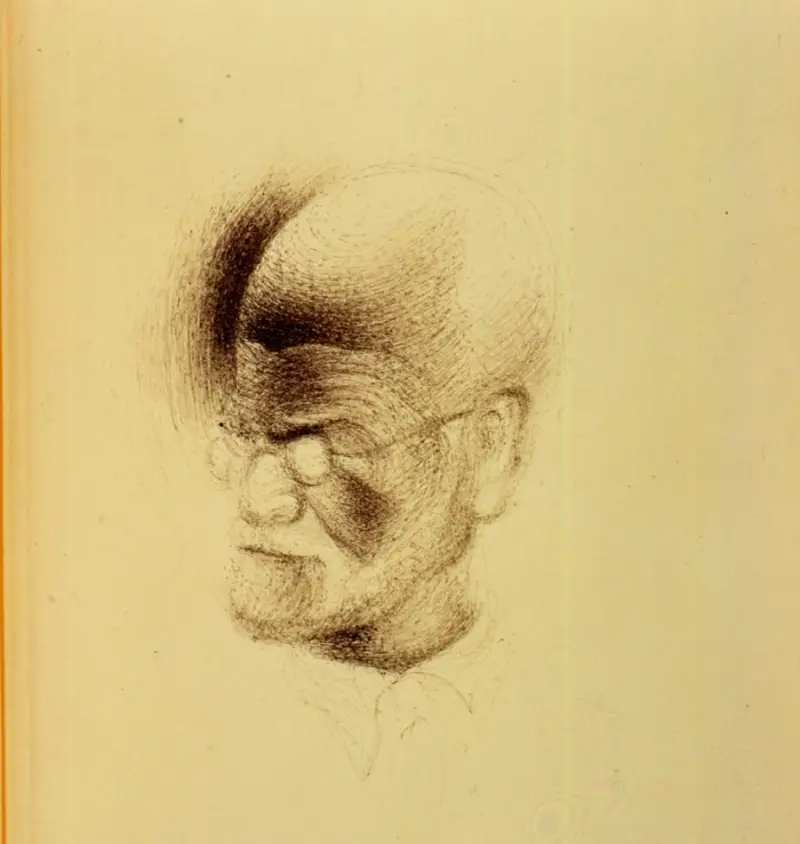
Dalí and Freud met at Freud’s home in London in July 1938. Freud was 82; Dalí was 34. They had only this one encounter, but both left records of their impressions, and Dalí made sketches of Freud as they sat together. Their accounts suggest a meeting shaped less by easy rapport than by mismatched expectations. Freud described Dalí as a “fanatic.”
Dalí had tried to meet Freud before, travelling to Vienna several times without making an introduction. The Freud Museum London recounts that he instead imagined extended conversations with his hero. In one fantasy, Freud accompanied him to his hotel and spent the night clinging to the curtains. By the time Dalí finally met him, the artist had spent years building up the encounter in his mind.
Freud’s writings on the unconscious, sexuality and dreams had occupied Dalí since his teens and early twenties, as Paul Gallagher describes. That intellectual investment helps explain why an audience with Freud carried so much weight for Dalí. He wasn’t simply introducing a painting; he wanted the thinker whose ideas had shaped his work to take the work seriously.
Art offered as evidence
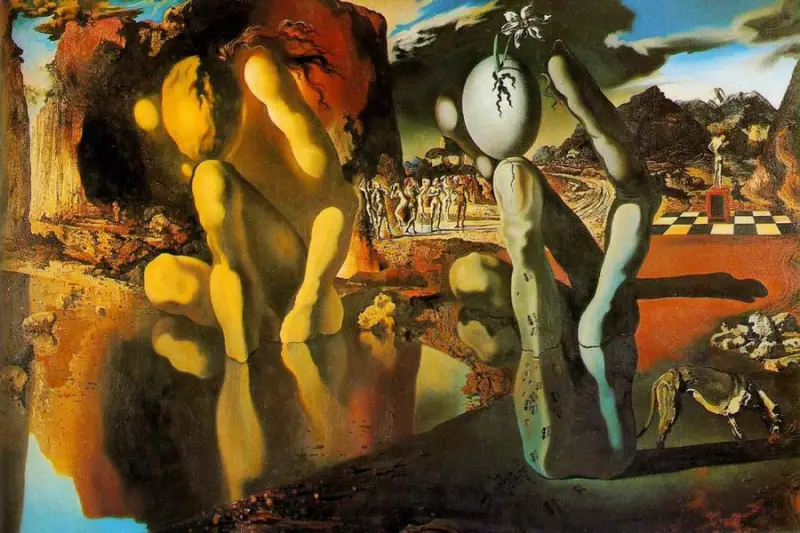
Dalí arrived with his painting The Metamorphosis of Narcissus and an essay he had written about paranoia. He presented the essay as a serious, ambitious piece of research, not a Surrealist provocation. In his account, Freud’s unresponsive manner made him more insistent as he pointed to the title and explained its purpose.
That effort reveals how Dalí hoped to be understood. He wanted Freud to see his experiments as connected to psychological inquiry, with the painting and essay giving form to questions about the mind. Yet bringing Freud work that drew on psychoanalytic ideas didn’t guarantee the response Dalí sought. Freud would have to interpret the painting in his own way, and his reported remark made the distance between their approaches plain.
“In classic paintings I look for the unconscious,” Freud supposedly told him, “but in your paintings I look for the conscious.” Dalí found the comment painful and wasn’t sure how to read it. It may have sounded like a rejection of the unconscious meaning he hoped Freud would find. At the same time, the remark suggests Freud saw deliberate construction in Dalí’s images: a painter’s decisions in the foreground, where Dalí wanted the viewer to sense deeper psychological material.
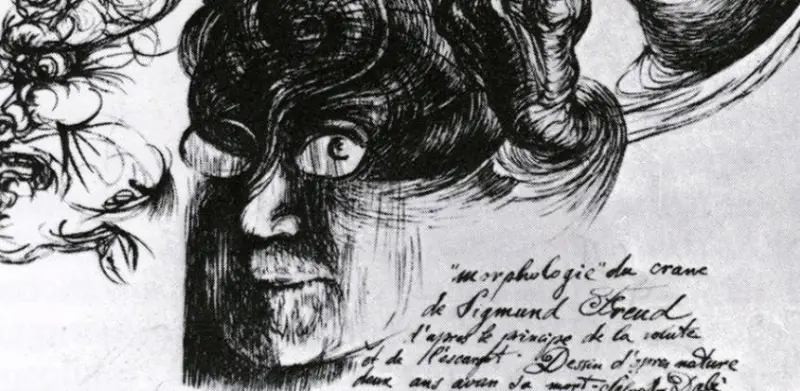
Dalí’s own response took the form of a striking caricature. Beside his sketch, he wrote that Freud’s cranium was a snail and that his brain had a spiral shape, “to be extracted with a needle!” The drawing turns Freud into an object of interpretation, reversing the roles Dalí had imagined for the meeting. He had arrived seeking insight from Freud; instead, he also recorded his own surreal image of the psychoanalyst.
Freud’s reservations, and a change of mind
Freud had reasons to approach the Surrealists cautiously. He wrote to their mutual friend, the writer Stefan Zweig, that they appeared to have selected him as their “patron saint.” Earlier, in 1921, André Breton, a poet and writer of the Surrealist manifesto, had arrived at Freud’s home without an invitation. After an unhappy reception, Breton attacked Freud in print, calling him an “old man without elegance,” and later accused him of taking ideas from him.
That history helps put Freud’s distance from the movement in context. Surrealists drew on subjects central to psychoanalysis, especially dreams and unconscious thought, but Freud wasn’t obliged to accept their artistic program simply because it used concepts associated with his work. His reported reaction to Dalí’s painting points to a specific difference: Freud looked for unconscious material in conventional art, while Dalí made the conscious act of painting part of the encounter.
Still, Dalí impressed him. Writing to Zweig after the meeting, Freud said he had previously regarded the Surrealists as “absolute (let us say 95 percent, like alcohol), cranks.” Dalí, he added, had made him reconsider. Freud cited the young Spaniard’s “candid and fanatical eyes” and “undeniable technical mastery.” That assessment doesn’t amount to a conversion to Surrealism, but it does show that the meeting changed his view of at least one of its leading artists.
For Dalí, the encounter brought no clear confirmation that Freud understood his art as he intended. For Freud, it offered a reason to distinguish Dalí from his wider reservations about the movement. Their exchange remains revealing because it captures that gap: the artist sought recognition through Freud’s ideas, while Freud responded to the artist’s presence and skill. It’s a reminder that artistic influence doesn’t require agreement—and that a brief meeting can complicate a settled impression without resolving the differences behind it.