Dinosaur Fossil Lessons for K–8: Connecting Bones, Rocks and Geologic Time
Age-based lessons and low-prep activities help students explore fossil formation, changing environments and Earth’s geologic history.
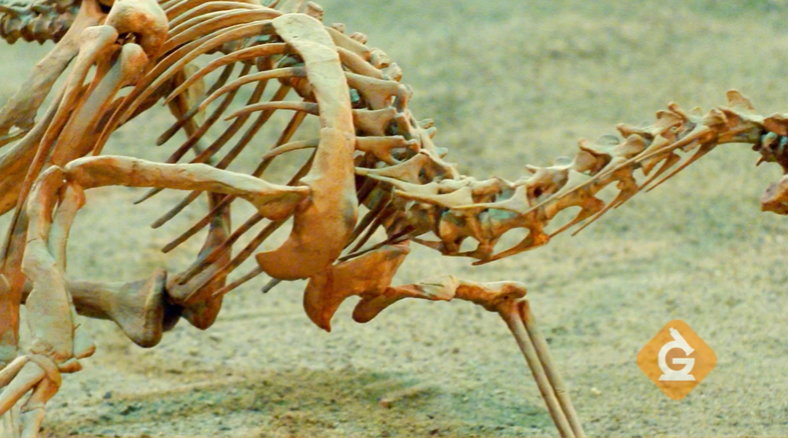
Dinosaur fossils give teachers a vivid way into geology: the remains students picture as ancient bones are often mineralized records preserved in rock. That idea can anchor lessons on sedimentary layers, changing environments and the long timescale of Earth’s history, with activities matched to students from kindergarten through eighth grade.
Begin with what a fossil records
Ask students what a dinosaur skeleton in a museum is made of, and note their answers before introducing fossilization. Many will say the bones themselves survived. In many fossils, the original material broke down over time while minerals filled or replaced it, preserving a rock form shaped by the organism. The details vary among fossils, so teachers can use this as an opening idea and build toward the different ways evidence of past life is preserved.
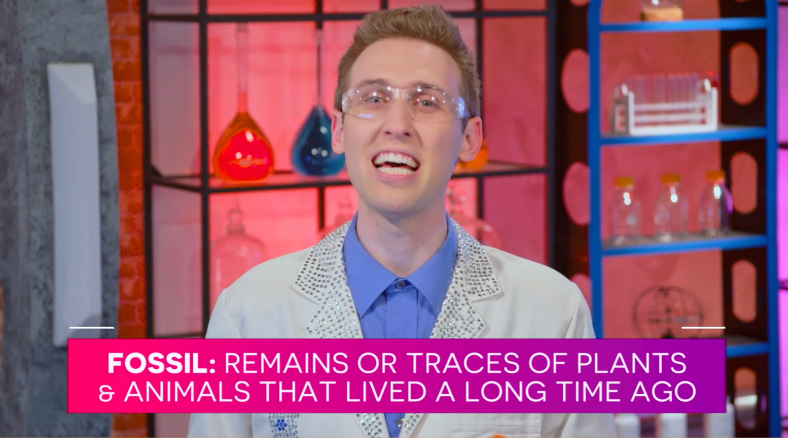
That shift helps students treat fossils as evidence rather than simply as old objects. A fossil can preserve part of an organism, such as a bone, or record an activity, such as a footprint. Comparing those forms gives learners a concrete way to distinguish body fossils from trace fossils, then ask what each can reveal about life and conditions in the past.
Choose resources by grade and classroom time
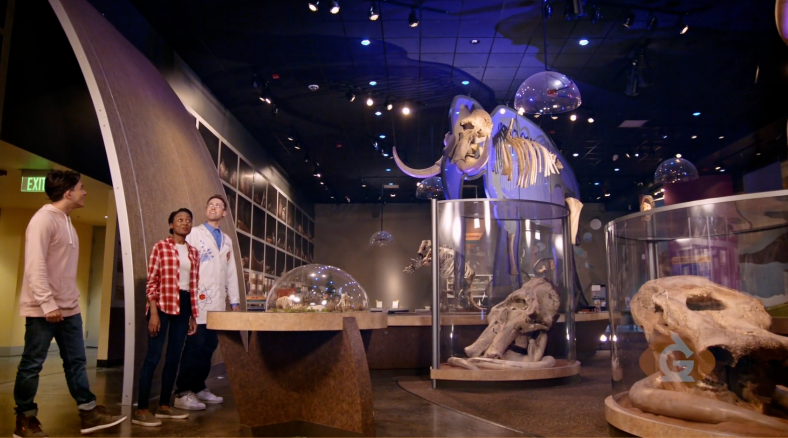
The resources below pair short video lessons with activities that call for relatively little preparation. Teachers can use the grade bands as a starting point, then adjust the discussion and task to their students’ background knowledge.
| Resource | Best for | Prep level |
| Timescale of Earth’s Events | K–2 | Zero prep |
| Fossils & Extinction | 3–5 | Zero prep |
| Earth’s Landscapes | 3–5 | Zero prep |
| The Fossil Record | 6–8 | Zero prep |
| Rock Layers (Geologic Time) | 6–8 | Zero prep |
| Rocks & Minerals (Including Rock Cycle) | 6–8 | Zero prep |
| Shake Table DIY Activity (Timescale of Earth’s Events) | K–2 | Low prep |
| Sedimentary Rock Model DIY Activity (Earth’s Landscapes) | 3–5 | Low prep |
| Make Your Own Fossil DIY Activity (Fossils & Extinction) | 3–5 | Low prep |
| Sedimentary Rock Formation DIY Activity (Rock Layers – Geologic Time) | 6–8 | Low prep |
| Fossils in Rock Layers DIY Activity (The Fossil Record) | 6–8 | Low prep |
| Grow Mineral Crystals DIY Activity (Rocks & Minerals) | 6–8 | Low prep |
Build the ideas across grade bands
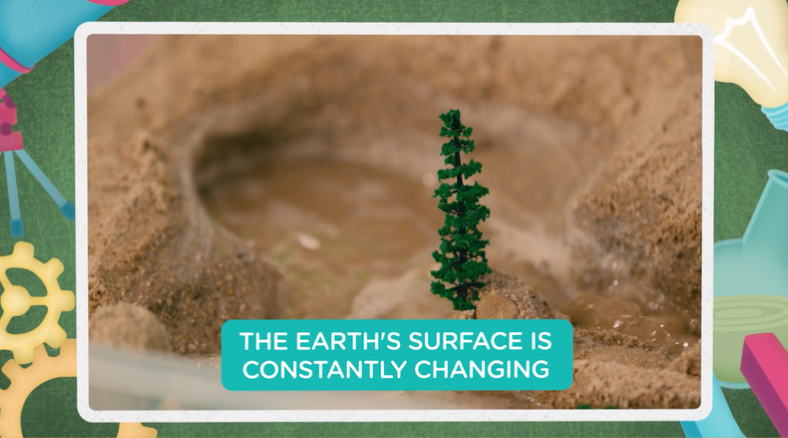
Kindergarten through grade 2: time and change
For younger learners, focus on the idea that fossils are clues left by living things from long ago. Connect that idea to familiar observations: landscapes change, and the environment students see now is not fixed. A timeline activity can make the distance between a child’s lifetime and Earth’s history easier to discuss, without asking students to master every interval at once.
The Timescale of Earth’s Events activities and video offer an entry point. Ask students what a fossil can tell us and what it cannot tell us. That distinction encourages curiosity while keeping conclusions tied to evidence.
Grades 3–5: fossils and former environments
In the middle grades, shift attention from the animal to the place where its fossil was found. A marine fossil in a present-day desert can prompt students to consider how environments change over time. The key is to use the fossil as a clue, then ask what other evidence would help explain the setting. This keeps the lesson focused on reasoning rather than treating one find as a complete account of the past.
Fossils & Extinction activities and video can introduce preservation and extinction, while the Earth’s Landscapes material connects fossil evidence with rocks and landforms. A model-making activity can help students see how layers form and how traces may be preserved within them.
Grades 6–8: layers, sequence and the fossil record
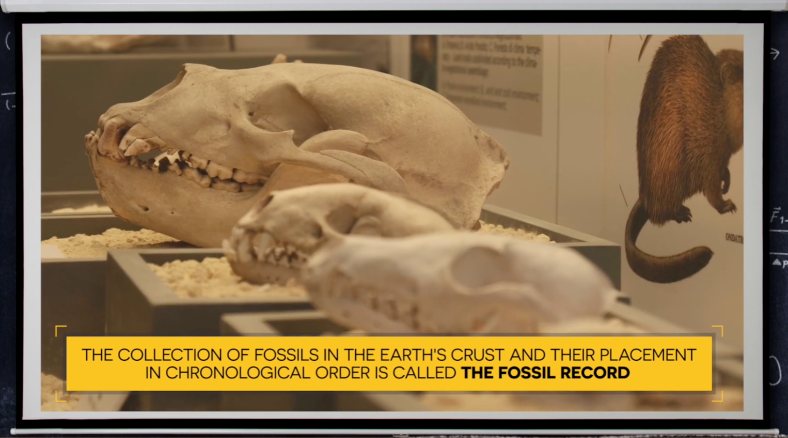
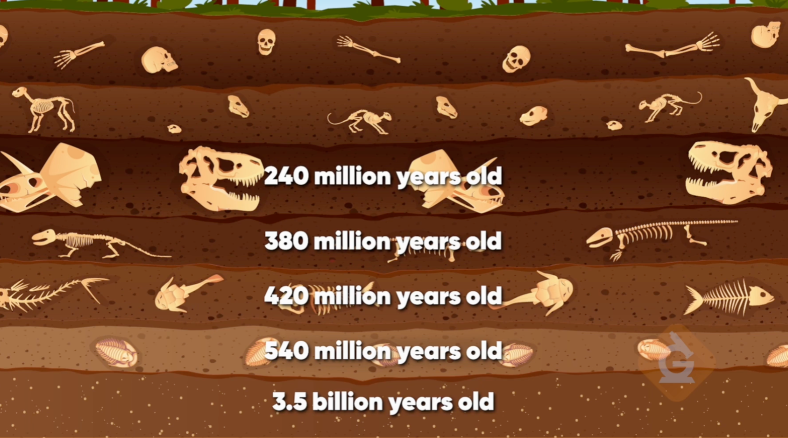
Older students can work with the fossil record as evidence organized through rock layers. They can compare fossils from different layers, consider what their sequence suggests about change, and discuss how index fossils help researchers compare the relative ages of rock layers. The aim is to move past movie images of paleontology toward careful interpretation of evidence and the scale of geologic time.
The Fossil Record pairs naturally with lessons on rock layers and geologic time. Sedimentary rock models and fossil-in-layer activities give students a way to represent sequence and discuss what a model leaves out. Lessons on rocks, minerals and crystal growth can add a closer look at the materials involved in preservation.
A 20-minute classroom sequence
A short lesson can still link a misconception to evidence and a hands-on demonstration. For grades 3–8, the following sequence fits into about 20 minutes:
- Minutes 1–5: Ask whether museum dinosaur skeletons are made of bone or rock. Let students explain their thinking, then introduce mineral replacement as one way fossils form.
- Minutes 6–15: Show the Fossils & Extinction video for grades 3–5 or The Fossil Record video for grades 6–8.
- Minutes 16–20: Have students press the bottom of a shoe into clay or Play-Doh. Use the imprint to discuss how a trace fossil differs from preserved body material.
The value of this sequence is the connection it makes between a familiar dinosaur image and several larger science ideas: preservation, evidence, environments and time. Teachers can extend the discussion by asking what a footprint reveals about an organism’s activity, or how rock layers might help place evidence in sequence. The next step is to have students explain what their model shows and where its limits are; that habit turns a memorable activity into stronger geological reasoning.