Dancing Raisins: A Simple Experiment in Bubbles, Density and Buoyancy
In soda water, carbon dioxide bubbles carry raisins upward before popping lets them sink again. The two-glass activity makes buoyancy visible.
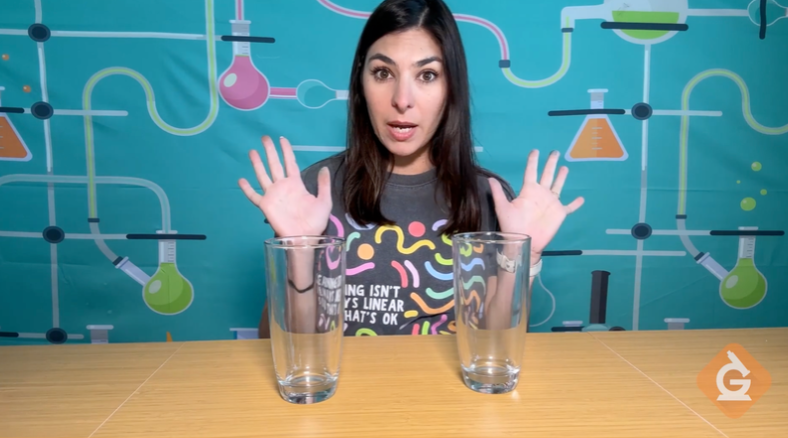
A few raisins can make an invisible force easy to see. Place them in soda water and carbon dioxide bubbles gather on their surfaces, carrying them upward; when the bubbles disappear at the surface, the raisins sink again. That repeated rise and fall gives learners a direct way to observe how gas bubbles affect buoyancy.
The comparison with plain water makes the activity especially useful. Keeping the glasses, liquid amounts and raisins alike helps isolate the key difference: one liquid releases carbon dioxide bubbles and the other does not. The result is a small, repeatable investigation that can prompt predictions, close observation and discussion about forces acting on objects in fluids.
Set up a two-glass comparison
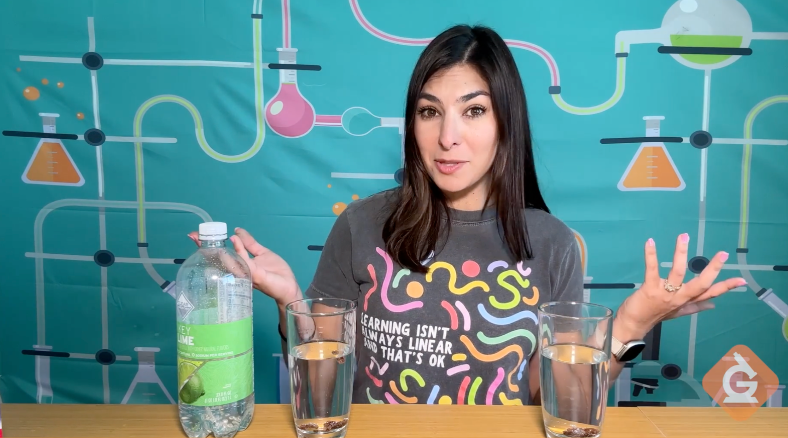
Gather raisins, soda water, tap water and two clear glasses. Cranberries, carrot pieces and apple slices are optional alternatives for a follow-up comparison. Clear glasses let learners watch for bubbles on the food and track whether each piece stays at the bottom or moves through the water.
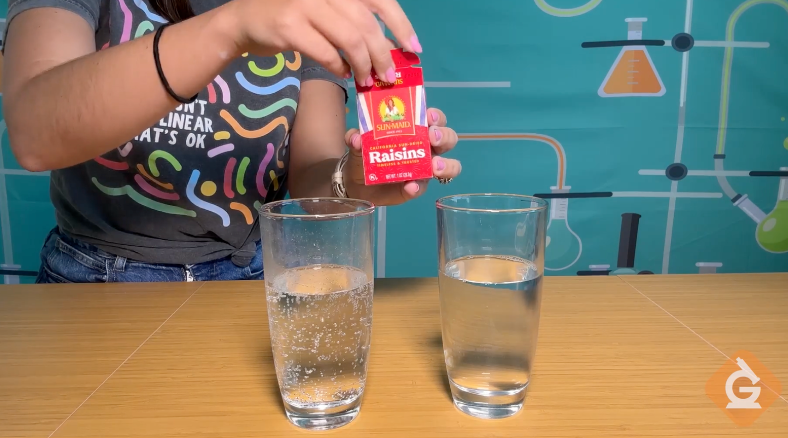
Put the glasses side by side. Fill one with tap water and the other with soda water, using the same type of glass and the same volume in each. Drop an equal number of raisins into both. Changing only the liquid makes it easier to connect any difference in movement to the bubbles in the soda water.
Before adding the raisins, ask learners to predict what they expect to see. Will they sink, float or move between the two? Then watch for bubbles on the raisins as well as bubbles elsewhere in the glass. Give the raisins time: the movement may happen in repeated cycles rather than all at once.
Why the raisins rise and sink
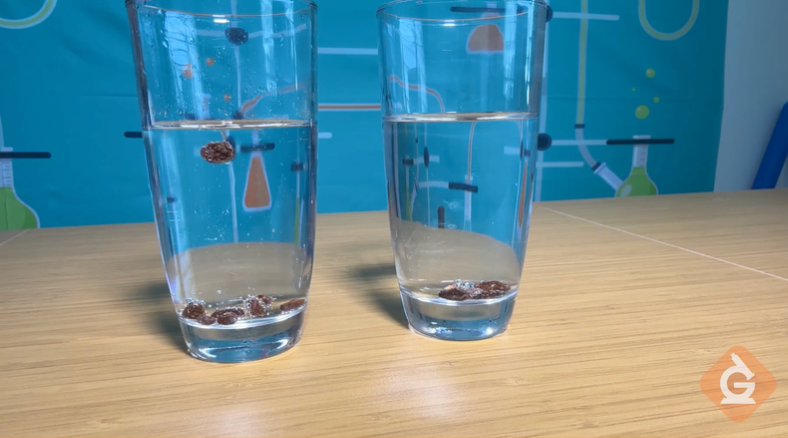
In tap water, the raisins are expected to settle at the bottom. Soda water produces a different pattern because it contains carbon dioxide dissolved under pressure. Once the soda water is poured, some of that gas escapes as bubbles. Those bubbles can stick to the uneven surfaces of the raisins.
A raisin with bubbles attached becomes part of a larger raisin-and-gas combination. The bubbles add volume and help that combination displace water, increasing the upward buoyant force acting on it. When that force is enough to lift the raisin, it travels toward the surface. The raisin itself hasn't become less dense; the bubbles change how the combined object behaves in the water.
The cycle at the surface
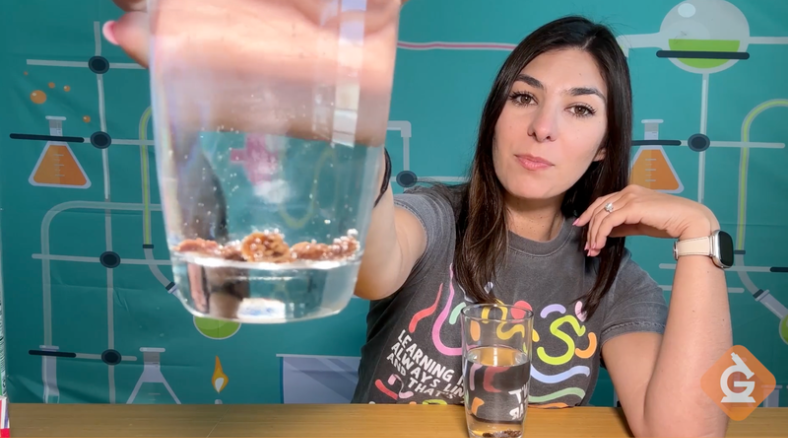
At the surface, bubbles escape or pop. Without those bubbles attached, the raisin no longer gets the same lift, so it sinks. As it descends, more carbon dioxide bubbles may collect on it, starting the cycle again: bubbles gather, the raisin rises, bubbles disappear, and the raisin falls. How often and how clearly this happens can vary with the food pieces and the condition of the soda water.
In plain water, there isn't the same supply of escaping carbon dioxide to create this repeated lift. Small bubbles may still be visible, but without enough gas attached to change the combined object's buoyancy, the raisins are likely to remain at the bottom. This comparison helps distinguish the presence of bubbles from their effect: bubbles matter when they change the upward force acting on an object.
Extend the observation
Density describes how much matter is packed into a given volume. Buoyancy is the upward force a fluid exerts on an object. An object rises when the upward buoyant force is sufficient to overcome its weight. In this activity, attached gas bubbles change the behavior of the raisin-and-bubble combination; when they detach, the balance changes and the raisin sinks.
For another round, try cranberries, carrot pieces or apple slices. Ask learners to predict which food will show the clearest movement, then compare what they observe. Keep the amount of soda water and the number and size of pieces consistent where possible. Smaller raisins may show more noticeable movement, but the outcome depends on how bubbles attach and how each piece interacts with the water.
Have learners describe the sequence before explaining it: where the food starts, when bubbles appear, what happens at the surface and what follows. That order encourages evidence-based explanations and gives them something concrete to connect with the terms density and buoyancy. The experiment's useful lesson is simple: an object that sinks can still rise when bubbles change the forces acting on it.