Workplace Learning: Turning Training Into Lasting Changes in Behavior
Training sticks when employees can practise during work, find guidance in the workflow and get timely support from managers.
Training only changes how work gets done when employees use new skills after the course ends. For learning and development teams, the challenge is helping people replace familiar routines with new ones while they’re managing daily tasks, deadlines and customer needs.
That shift takes more than remembering course content. Employees need to unlearn the old process, practise the new one and apply it in real situations. TalentLMS’s Habit Hugging report found that 65% of employees agree that dropping an old habit is harder than learning a new one. That finding points to a practical design challenge: training has to account for the habits people bring back to work.
Completion doesn’t show whether work has changed
Employees may finish training and still rely on the tools and routines they used before. Only 41% consistently use a new way of working after training, while 52% sometimes return to old habits. Those figures suggest that course completion alone gives L&D teams an incomplete view of whether learning is affecting performance.

Three signals can help identify a gap. First, the work itself may look much as it did before: errors, rework and questions remain steady. Second, employees may still use tools that managers believe have been replaced. In the report, 42% of employees said they continued using such tools. Third, people may find workarounds and keep quiet about what they don’t know. TalentLMS’s Learning Debt report found that 62% use workarounds when they lack the skills or training for a task, and 47% have stayed quiet about not knowing how to do something.
Workarounds can keep tasks moving, but they also make skill gaps harder to see. After training, employees may be reluctant to admit they’re unsure, so they solve problems on their own. If nobody checks how the work is being done, the old routine can persist unnoticed.
Why people return to familiar routines
Time pressure is one reason. In TalentLMS’s L&D Benchmark Report, 53% of employees said heavy workloads leave little time for learning. Among employees who fall back on old ways of working, 30% cited tight deadlines or high workloads, and another 30% pointed to too little practice or guidance after training. When employees have to apply a skill immediately, a familiar process can feel like the safest choice.
Familiarity also saves time in the moment. Among employees who keep working as before or return to old routines, 55% said the old way felt more familiar and 48% said it was faster. A process people already know requires less checking and fewer pauses. That convenience can outweigh the intended benefits of a new method, especially when staff are busy.
Managers may not see the gap soon enough to help. TalentLMS’s Skills Visibility report found that 90% of managers believe they understand their team’s skills, compared with 69% of employees who agree. The difference matters: managers can only offer useful follow-up when they know where employees feel uncertain and what is getting in the way.
Check behavior alongside course progress
Start by finding out whether employees are applying what they learned, then match the response to the cause. Forty-one percent of employees said their company tracks training completion, but only 36% said it checks whether people use what they learned. Thirty-four percent said their company assesses whether they understood the training. These measures capture different parts of the learning process, and completion by itself can’t show whether a new routine has taken hold.
Look at the work employees produce. Talent Talks guest Kevin M. Yates recommends identifying the actions people need to take in their workday to meet a business goal, then checking whether those actions happen. For a customer service team, that could mean reviewing customer satisfaction scores and feedback, complaint and escalation levels, a sample of email or social media replies, and live calls to hear whether staff use the trained approach.
A small sample of work can reveal whether the new behavior is appearing. Managers also need a clear view of where employees need support: only 51% of employees say their manager knows how often they struggle with job-related skills. If workload is the obstacle, make room for practice during the workday. If old routines persist, follow up promptly. If employees aren’t raising questions, ask them directly about the difficulties they’re encountering.
Build reinforcement into daily work
Support is more likely to help when employees can use it where the task happens. Half of employees say incorporating new ways of working into everyday workflows helps. That could mean a reply template that demonstrates how to acknowledge a customer, or a short video inside a work tool that shows how to handle a specific issue. Guidance placed close to the task can make the trained method easier to recall when time is tight.
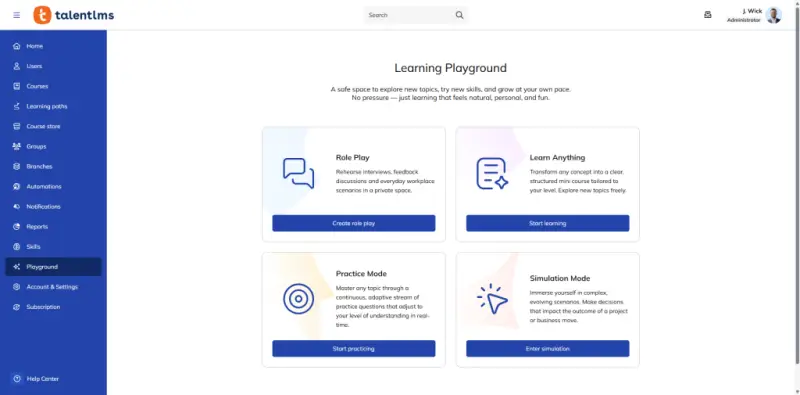
Practice gives employees a chance to build confidence before they apply a skill in a live situation. Forty-nine percent say more opportunities to practise would help. Role-play, sequenced exercises and personalized support can all help employees try a new approach, see where they get stuck and repeat it before it becomes part of their routine.
Managers can reinforce the change through brief, regular conversations about what went well, customer feedback, obstacles and next steps. They also need to use the new approach themselves. In TalentLMS’s Habit Hugging report, consistent adoption was 49% when managers modelled the new way of working, compared with 22% when they didn’t.
The useful measure of learning is what employees do after training. When teams check the work, give people room to practise and make managers part of the follow-up, they have a better chance of turning a new skill into a daily habit.